About
The discipline is risk.The subjectis everything.
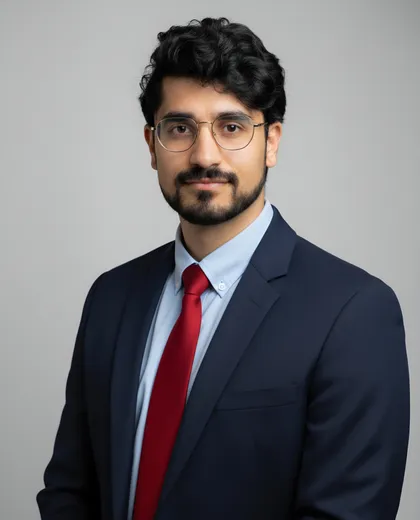
I'm a multi-disciplinary risk professional with over a decade of experience at the intersection of credit risk, sustainability, climate risk, and data analytics — across consulting, financial services, and regulation.
At Ernst & Young I advise major financial institutions on climate risk and ESG programs, regulatory disclosure, financed emissions, and credit risk analytics. Before that, I sat on the other side of the table: at OSFI, Canada's federal prudential regulator, I built analytical tools and models for assessing climate risk to Canadian financial institutions and worked with international bodies including the NGFS and IAIS on climate risk metrics and disclosure standards. Earlier, at CMHC, I developed Monte Carlo credit risk and economic capital models for Canada's housing and securitization markets, and at WSP I led sustainability and feasibility analytics for major infrastructure and transportation clients.
I hold an MEng in Mechanical Engineering and a BASc in Engineering Science from the University of Toronto, along with certifications in Data Science, Sustainability & Climate Risk (GARP), and ESG (Fitch Learning). I build in Python and R, and I've developed predictive models and cloud-based solutions for climate and financial risk throughout my career.
Credibility
Where the perspective comes from.
Philosophy
Risk thinking, applied everywhere.
Institutions survive uncertainty by being deliberate about it. They write down their limits before the crisis, define how much downside they can absorb, and decide — in advance — which risks are worth taking. Most individuals never do this, and it shows: in reactive decisions, unexamined exposures, and goals inherited rather than chosen.
My conviction is that the core tools of risk management — limits, tolerance, and appetite; inversion and pre-commitment; the dichotomy of control; first-principles scrutiny of what you actually believe — translate directly to careers, health, relationships, and the other decisions that compound into a life.
I've written that philosophy down as a working framework: Personal Risk Policy 101. It's the same rigour I bring to a bank's balance sheet, pointed at the decisions that matter most.